

The One Advertising Idea that’s (Almost) Always Clever
On the twenty-first floor of the Leo Burnett building in Chicago, I sat at my Creative Director’s desk and waited for their critique. My Art Director and I had just finished presenting conceptual sketches for an ad campaign.
One Creative Director looked at the work and said, “Stuff made out of stuff always works.” That simple phrase became one of the most useful creative ideas I learned during my advertising career.
I call it Stuff Made Out Of Stuff. It's a visual solution where two visuals unite to create one powerful message. Sometimes there's a logo and tagline. Sometimes there isn't. But when it works, the idea does the heavy lifting.
READ THE FULL ARTICLE ON MEDIUM →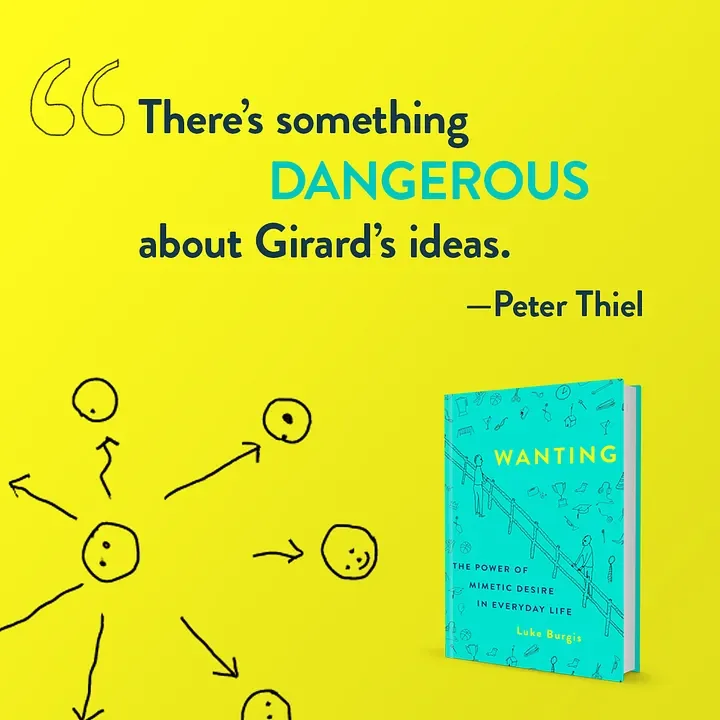
I Read This So You Don't Have To: Wanting, The Power of Mimetic Desire in Everyday Life
Wanting, The Power of Mimetic Desire in Everyday Life, by Luke Burgis, is a deep dive into the mechanics of desire, the power of modeled behavior, and how to leverage desire to achieve higher-order goals.
Burgis explores the idea that much of what we want isn't created independently. Instead, we often learn what to want by watching what other people want.
In this article, I break down some of the most useful ideas from the book and explore what mimetic desire can teach us about ambition, influence, creativity, and everyday life.
READ THE FULL ARTICLE ON MEDIUM →
Five Communication Strategies that I Learned While Halting a Fracking Pipeline with Surfrider NYC
Between 2017–2020, I worked on one of the most rewarding experiences of my life as a writer, content creator and WordPress developer: volunteering to update the Surfrider NYC website in New York City.
To update the Surfrider website, I personally kept updated on all events surrounding the Williams NESE pipeline. I joined the Surfrider NYC Executive Team for meetings and worked with our leaders to capture the news and craft our point of view on why we opposed the pipeline.
At first, we weren't optimistic that the campaign would be effective or if the Queens and Brooklyn community would show support. But we grew momentum, and that helped us gain the ear of the New York Department of Environmental Conservation.
Through this experience, our team utilized five powerful strategies to unify our community and create a consistent message.
READ THE FULL ARTICLE ON MEDIUM →
My Top Five Tips to Punch Up Your Writing
Readers like a quick start. They like it when your words land easily and can be followed without confusion.
Keep the subject of your sentences reasonably short. Less than six words can be a good limit. This helps readers get to your verb faster, which tells them what action is happening.
In this article, I share five practical techniques for making your writing punchier, clearer, and more powerful.
READ THE FULL ARTICLE ON MEDIUM →
The Only Question Your Advertising Absolutely Must Answer
Your readers want to know why they are reading. Brands must be prepared to answer this with clear and punchy words.
Because even though you might have a twenty-minute pitch deck filled with your brand's history, product features, benefits, and reasons to believe, your audience is probably wondering one simple thing.
What's in it for me?
Great advertising understands that the audience isn't interested in what you want to say. They're interested in what you can do for them.
READ THE FULL ARTICLE ON MEDIUM →
Five Traits of Great Writing in Advertising
Many people, including strategists, account executives, brand managers, and CMOs, work together to make a decision on what a brand should say. But how that message is spoken is when writers get the chance to shine.
Like a jeweler, writers have many different tools for a project. Each tool has a specific purpose and can polish dull sentences into sparkling gems.
Here are five tools that have appeared so often, they've become traits of great ads.
READ THE FULL ARTICLE ON MEDIUM → Five Communication Strategies that I Learned While Halting a Fracking Pipeline with Surfrider NYC
Between 2017–2020, I worked on one of the most rewarding experiences of my life as a writer, content creator and WordPress developer: volunteering to update the Surfrider NYC website in New York City.
Through that experience, our team utilized five powerful strategies to unify our community and create a consistent message.
READ THE FULL ARTICLE ON MEDIUM →
How Grammarly Leveled Up My Writing Hustle
Grammarly is for grammar, right? Well, that's how they got me. After a short time, I found Grammarly to be oh-so-much more — even more valuable than "Clippy," that old Microsoft assistant.
After two years of tracking, Grammarly became my tool for measuring my weekly output, evaluating my habits, and dangling a carrot of motivation.
Grammarly's weekly reports showed me exactly how much I wrote, how many unique words I used, my common mistakes, and my most-used tones.
According to Grammarly, my writing varied greatly over the past two years — from 2,000 to 100,000 words per week. That's a crazy-wide range. Here's what I learned from tracking it.
READ THE FULL ARTICLE ON MEDIUM →