
Win in Social Media by Acting Like It's a Party,
Not a TED Talk
Many brands treat social media like it’s a megaphone.
The response is often crickets.
For the brand Firestone Tires, our social media team used our brand tone and voice to create more meaningful conversations that kept us engaged with our fans, rather than always interrupting with a new topic.
For this post, we simply added to an existing discussion about classic cars. But how did we figure out what to say?
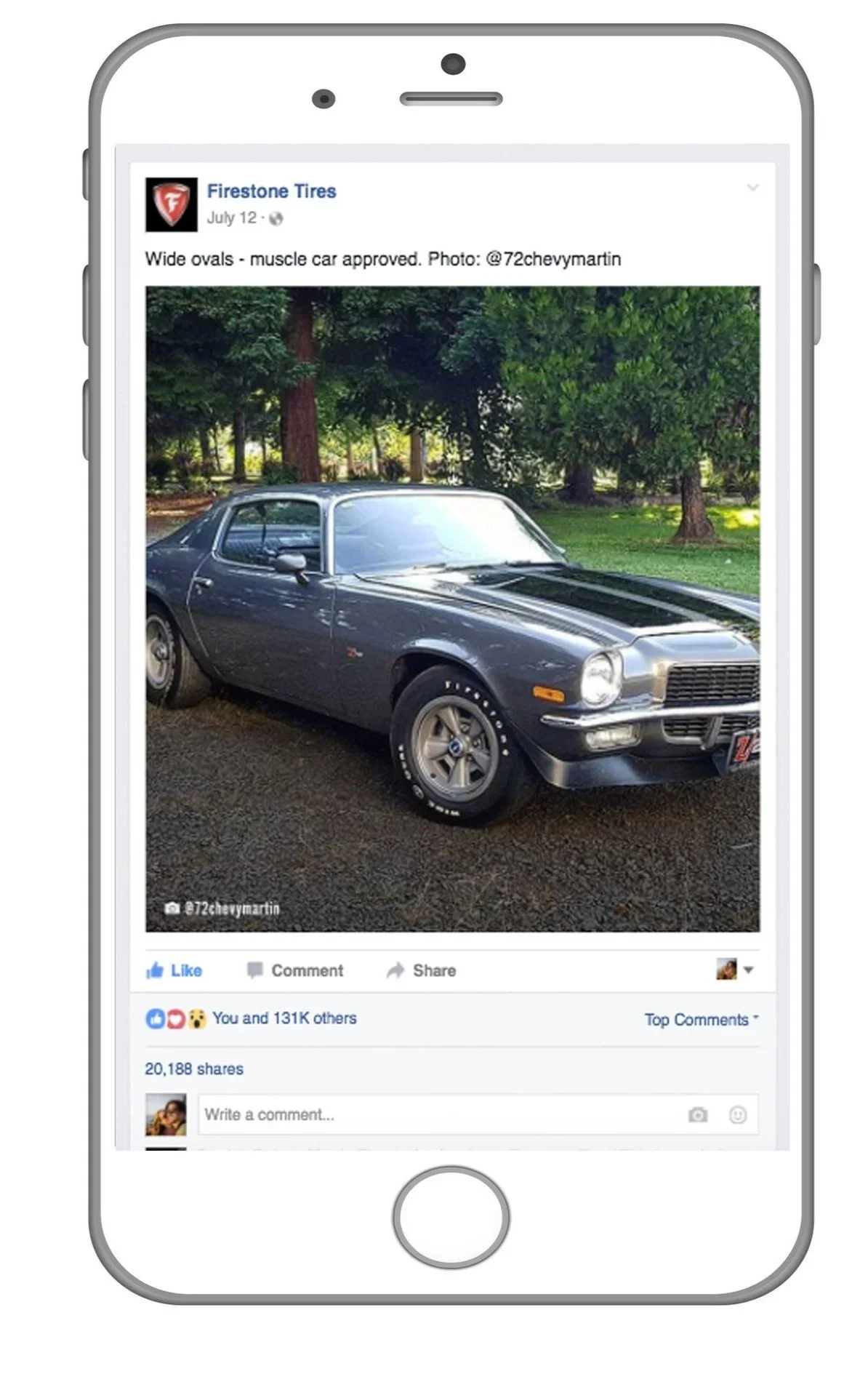
With our trusty Brand Guidelines, we could quickly create content with a clear brand tone and voice. This allowed us to join conversations—and use common social norms to contribute, rather than always trying to be the main character.
Treat Social Media More Like a Party; Less Like a TED Talk
1. Kept Our Ear to the Street
Just like at a cocktail party, you don’t want to be the interrupter who ruins the natural flow of conversation.
For Firestone, we used Social Listening to identify and track opportunities by searching keywords and hashtags and setting Google Alerts for relevant news. We tracked these opportunities in a spreadsheet.
One way we used this content was to repost our fans’ content. But we didn’t just repost it. We celebrated and elevated their content by adding our own design elements and copywriting.
2. Saved the Sales Pitch for Lower Funnel
Conversion advertising has its place in the marketing funnel. But often brands will lead with promotional and sales marketing, without fully believing in their true purpose. That’s like a loud guy who enters the party and starts selling widgets.
This is where communication and coordination pay off. We worked with our client and strategist to add variety to our content schedule. Of course, we also posted about specific products, benefits, promos, sweepstakes—all those great conversational lower-funnel tactics. But we also peppered in powerful brand messages that helped draw in an audience and kept fans engaged over time.
However, too much brand social can be a turn-off as well. It’s weird to not be a champion of the product that you’re selling. The nuts and bolts have to be in place.


3. Nurtured What Grew
Lucky for us, our account team and social media manager had built an excellent rapport with our client. That kept the lines of communication open, so that we could move quickly. For example: when our team noticed that a post was more successful, they’d notify our client and boost the reach—turning organic into paid media with a high chance of success.
That’s an opportunity that can be left on the table, because there’s often no budget to amplify the reach of successful social media.
Lucky for us, our client greenlit our boost, and that was the secret sauce that made our post go viral.
Most brands miss the opportunity. They let a successful post wither, never to capture the excitement.
Organic social can be a crystal ball that can be a powerful market research tool that gives you an honest look at your audience’s content preferences. It also doesn’t require the same effort as market testing, and can be a stepping stone for planning next year’s campaign!
Perhaps what’s working today in a brand’s feed can be the big idea that fuels tomorrow’s campaign?